Work
What sadev has built and runs.
ProjectDiscovery
Spot projects earlier. Keep watch across your markets.
ProjectDiscovery monitors public sources, reads project documents and brings relevant findings into one place — with the source attached. It was built for Philipp Verfahrenstechnik, which was expanding into Africa and needed to read a vast amount of material in a short time.
Signals as projects take shape
Early development
Licences and feasibility studies.
Spot new activity.
Worth watching from here.
Scope definition
Environmental and design reports.
See equipment needs.
Your machines are named here.
Procurement
Tender and EPC documents.
Check the buying route.
Time to be in the room.
How it works
- 1Monitor sourcesFollow agreed markets and sources on an ongoing basis.
- 2Read the detailAI extracts project names, locations and described equipment needs.
- 3Match your demandsBring relevant findings together for your teams.
- 4Act on the findingsReview the evidence and decide which projects to pursue.
From a source to a scored discovery
Source summary
Company A has received approval for the prospecting licence for Project B in Country C. The planned plant scope includes crushing, grinding and flotation. A feasibility study is expected next year.
Extraction
- Project:
- Project B
- Location:
- Country C
- Processes:
- Crushing, grinding, flotation
- Stage:
- Prospecting licence granted
Scored discovery
- Project:
- Project B
- Company:
- Company A
- Country:
- Country C
- Analysis score:
- 61/100
- Source:
- attached
A schematic example. The document type and the path are real; the names are placeholders.
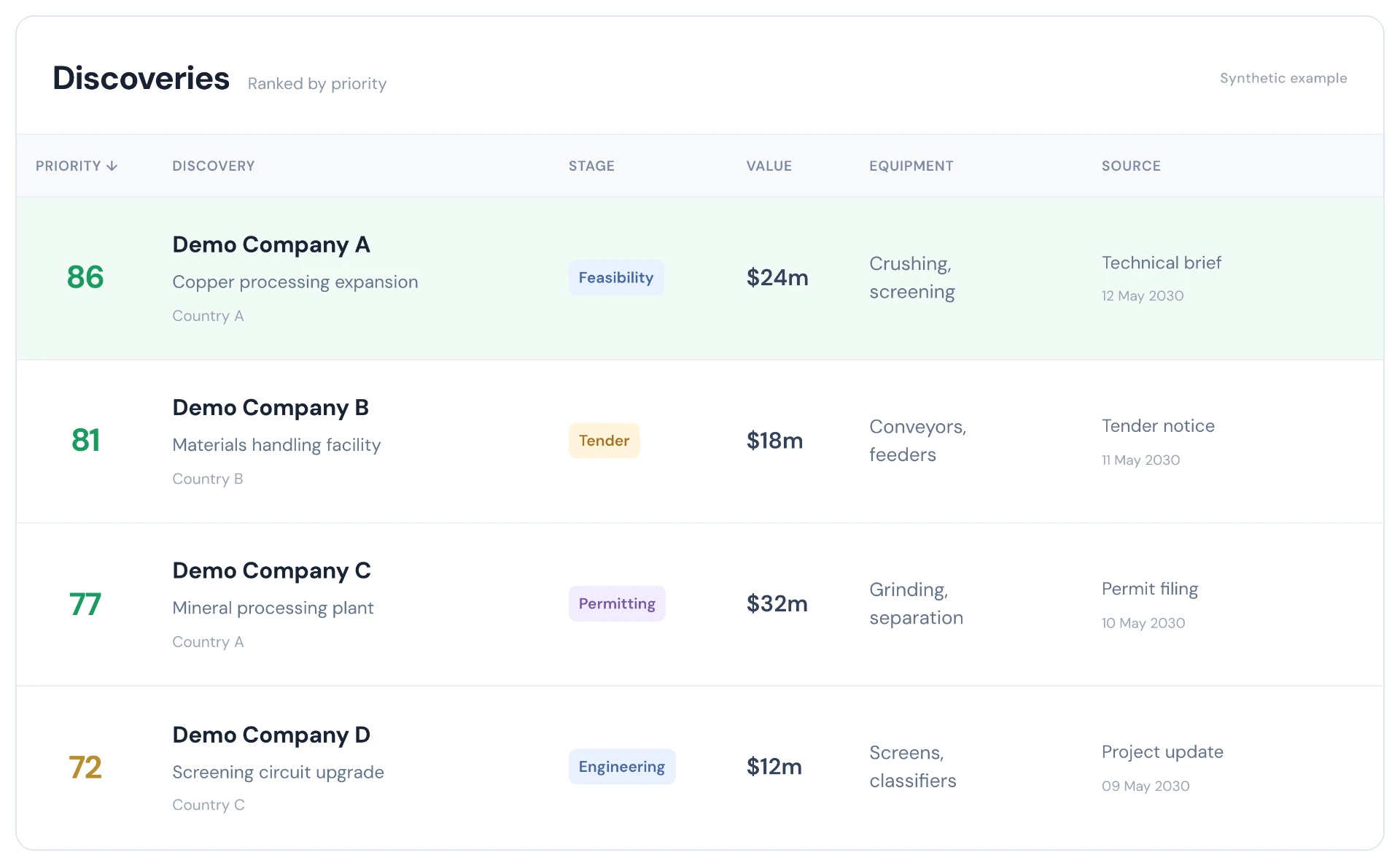
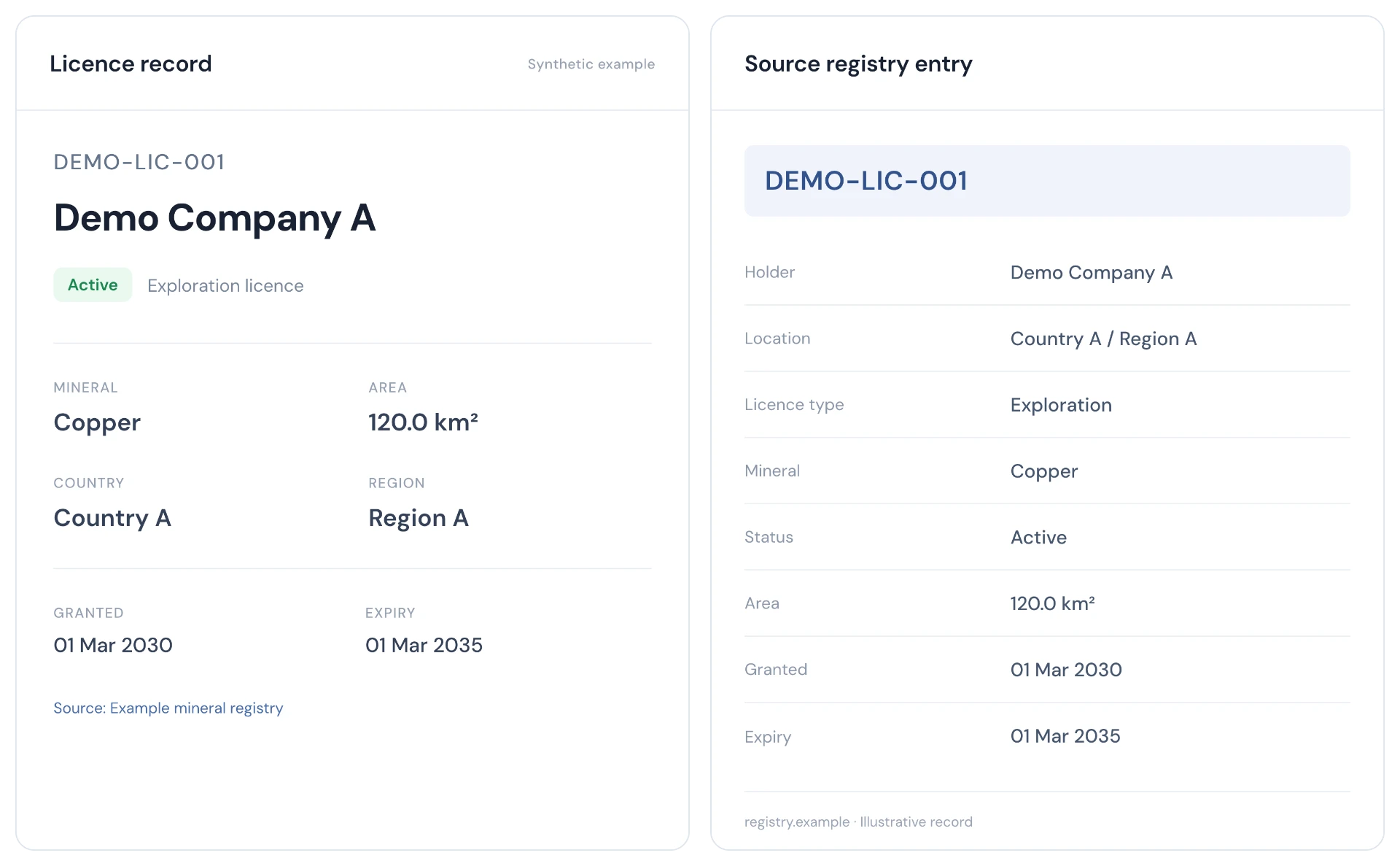
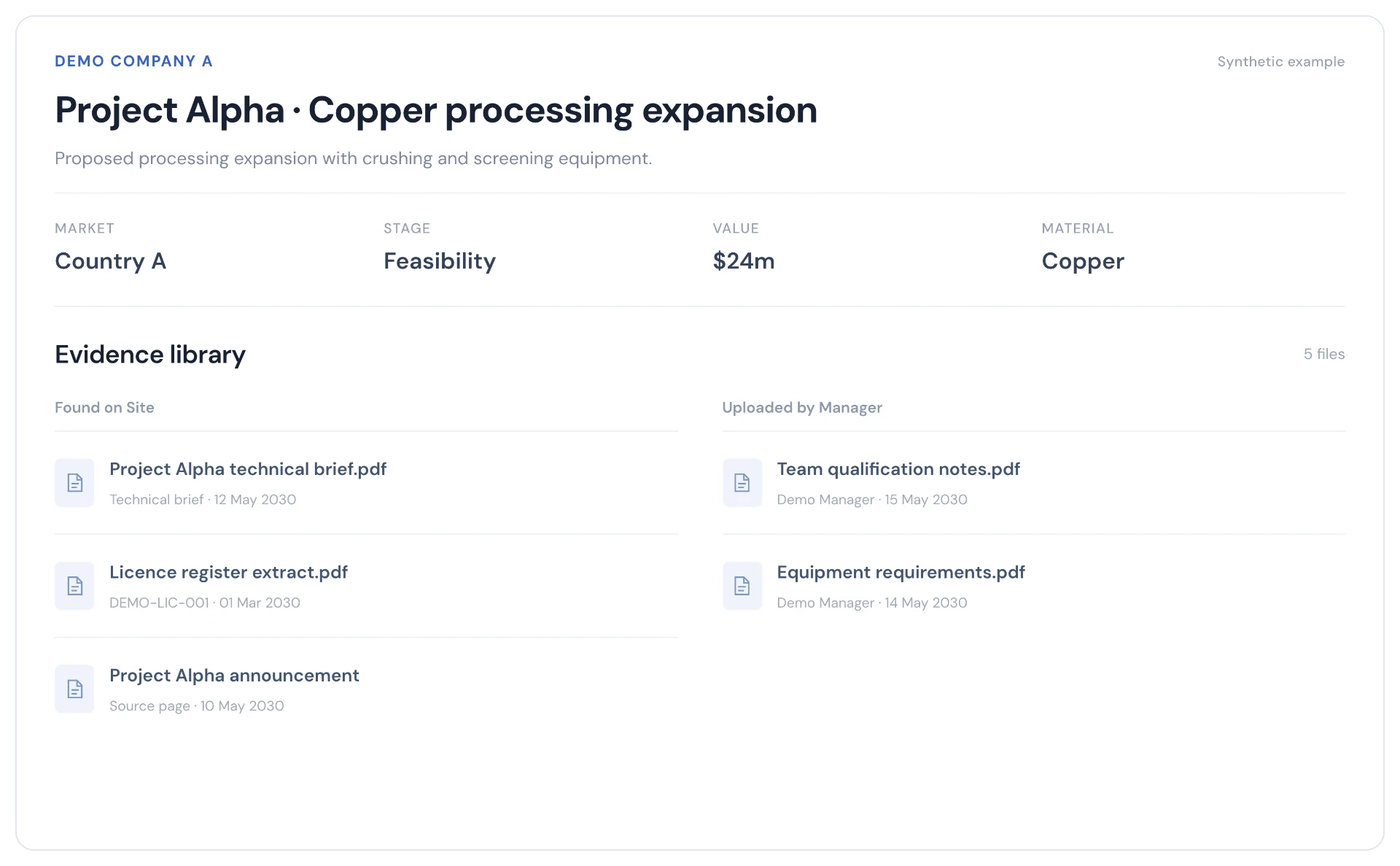
Your priority equipment. Your target markets. Your team's feedback.
Ask about a focused pilotInduMap
Asset and lead CRM for capital-project markets. In development.
InduMap gives a team the structure to map the projects and assets of a sector — plants, sites, infrastructure — and to record, for each one, its owners, operators, installed equipment and potential suppliers, together with development status, capacity and commissioning year.
On top of the asset map, the team manages its leads: new projects, expansions, tenders, spare parts and servicing, each with a priority, an estimated value, a follow-up date, supplier quotations and the research behind it — documented where the decision is made, so the team can decide which projects and companies to pursue. Configured per sector and region; the first instance is set up for energy infrastructure.
What the team records in it
- Assets
- owner, operator, installed equipment, potential suppliers, development status, capacity, commissioning year
- Leads
- type (new project, expansion, tender, spare parts, servicing), priority, estimated value, follow-up date, supplier quotations, research notes and sources
- Decisions
- which projects and companies to pursue, and why